Research
Alpine plants experience dramatically different conditions depending on small variations in terrain. My dissertation examines how this fine-scale topographic variability influences alpine plant population dynamics under environmental change.
I use long-term demographic data, microclimate sensors, and photogrammetry to quantify how microtopographic variation affects individual performance in two alpine cushion plants, Eritrichium nanum and Silene acaulis. This work tests whether within-population variation in vital rates creates portfolio effects that stabilize populations against environmental variability.
The research combines field experiments across multiple sites with demographic modeling to understand how processes operating at individual and local scales contribute to population persistence across broader environmental gradients. This approach provides a framework for understanding how fine-scale heterogeneity influences species responses to climate change.
Current work
Other projects
-
Spillover effects of organic agriculture on pesticide use on nearby fields
Larsen, A.E., Noack, F., Powers, L.C. (2024). Science.We analyzed field-level pesticide use on about 14,000 fields per year from 2013 to 2019 in Kern County, California. Surrounding organic cropland decreased insecticide use on organic fields, but increased insecticide use on nearby conventional fields. These spillover effects show how landscape-level agricultural composition shapes pest dynamics and pesticide use across regions.
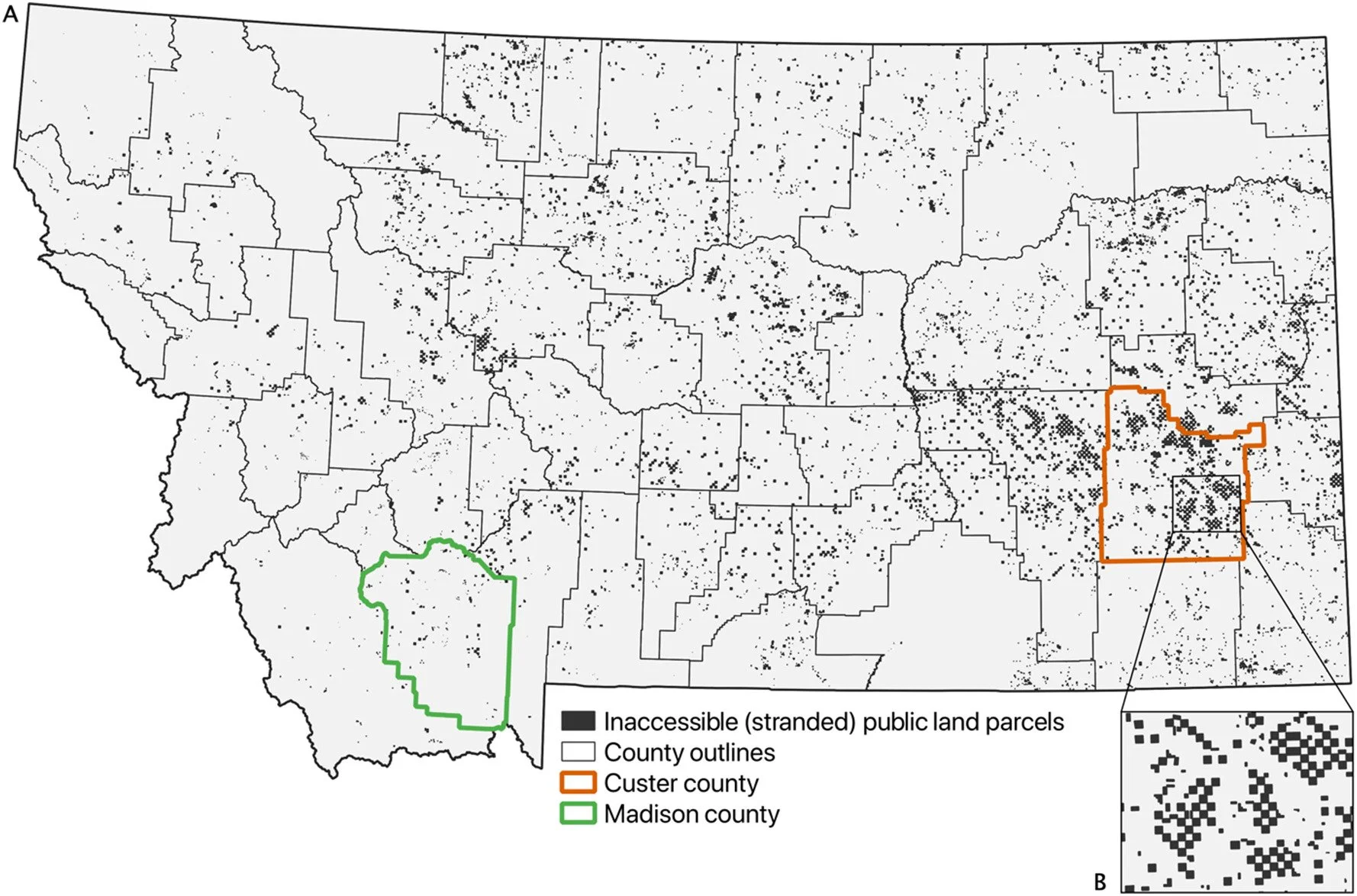
Reconnecting stranded public lands is a win-win for conservation and people
Powers, L.C., Larsen, A.E., Leonard, B., Plantinga, A.J. (2022). Biological Conservation.Millions of acres of public lands in the Mountain West are landlocked by surrounding private property. We showed that strategic land exchanges could reconnect these stranded parcels, creating ecological corridors for wildlife while meeting conservation targets within realistic budget constraints. All conservation reserve designs increased total protected area and improved landscape connectivity compared to the current configuration of stranded lands.
Evaluating climate-driven fallowing for ecological connectivity of species at risk
McComb, S., Powers, L.C., Larsen, A.E. (2022). Landscape Ecology.California's agricultural regions are home to endangered species like the San Joaquin kit fox. During severe droughts, many farmers fallow their fields, which can provide habitat connectivity. We modeled how drought-induced fallowing in California's Central Valley from 2011 to 2017 likely increased functional connectivity for kit fox movement. Our results show that even temporary increases in connectivity from fallowed lands could provide conservation benefits in intensive agricultural landscapes.
Identifying and characterizing pesticide use on 9,000 fields of organic agriculture
Larsen, A.E., Powers, L.C., McComb, S. (2021). Nature Communications.Organic certification permits certain types of pesticides, but pesticide use on organic fields is poorly documented. We identified about 9,000 organic fields in Kern County, California from 2013 to 2019 and characterized their pesticide use. The probability of spraying any pesticides was reduced by about 30 percentage points for organic relative to conventional fields. Among fields that did spray pesticides, we found little difference on average between organic and conventional fields, though there was substantial crop-specific variation.
-
Climate and species traits shape alpine plant responses to climate change in the U.S. Rocky Mountains
Powers, L.C., Borgman, E., Legg, K.L., Witwicki, D.L., Doak, D.F. (in prep.).
Powers, L.C., Borgman, E., Doak, D.F. (2024). National Park Service Scientific Report NPS/SR—2024/221.
We analyzed vegetation surveys from five GLORIA sites across the southern Rocky Mountains, spanning from 2003 to 2021. Across all sites there was strong evidence for turnover, with originally absent and rare species disproportionately increasing over time and common species generally declining. Graminoids and shrubs increased more than forbs. Multiple climate variables significantly influenced changes in plant cover. Species with lower latitudinal ranges tended to increase more over time, while species with more northerly ranges often declined.
-
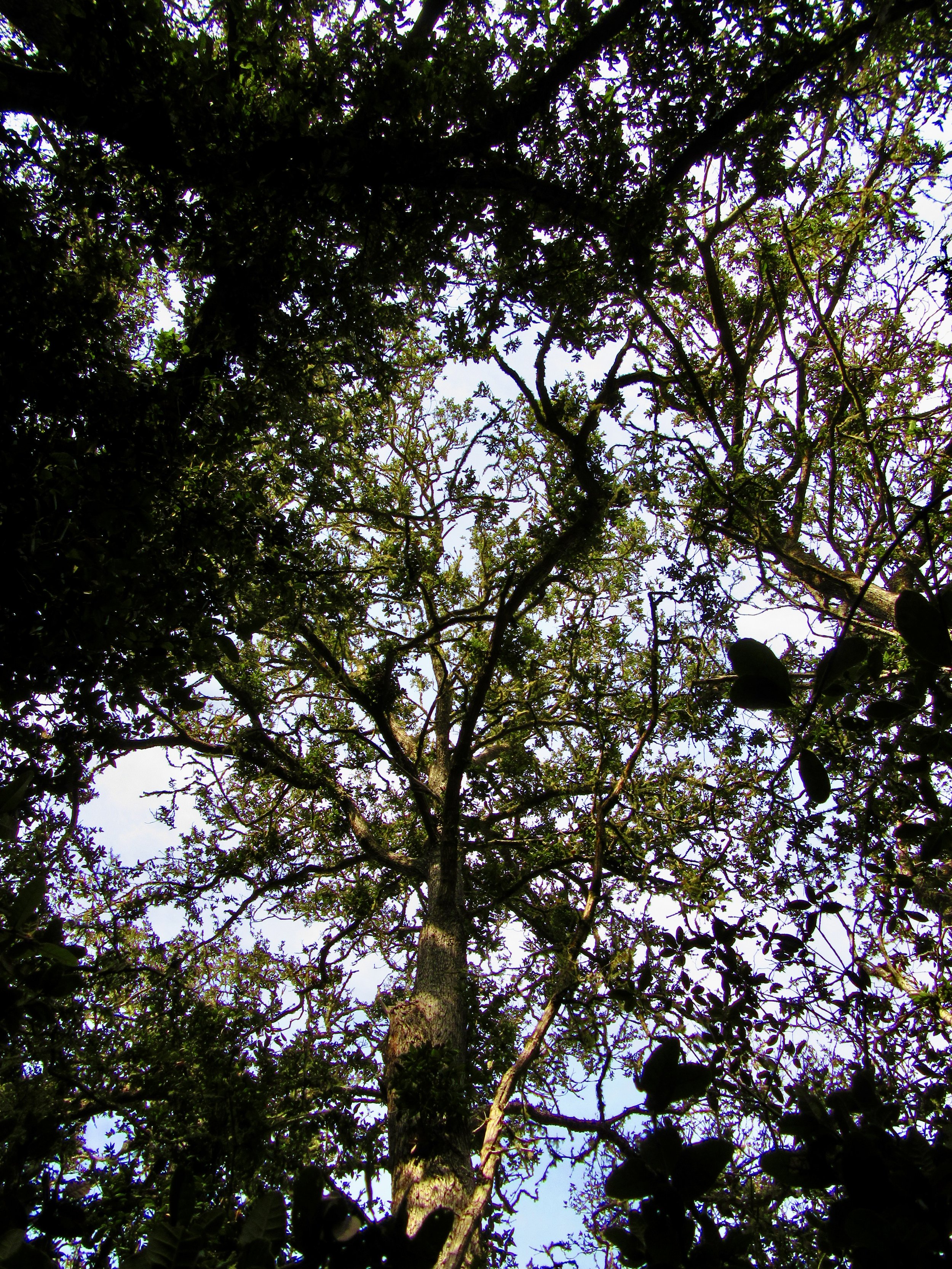
Climate change vulnerability assessment of Quercus tomentella (Island Oak)
McComb, S., Powers, L.C., Uy, J., Winchell, A., Wolf, L., Kendall, B., Melack, J. (2019). Report for The Nature Conservancy.Island Oak is found only on six California Channel Islands. We worked with The Nature Conservancy to assess climate change threats to this endemic species by modeling future habitat suitability and evaluating adaptive capacity.